



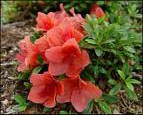
There are over 900 species of azaleas (Rhododendron spp.) and over 8000 recognized hybrids. Azaleas belong to the Ericaceae family (the heath family which includes blueberries and mountain laurels) and are used extensively by gardeners. These plants freely hybridize and there are new cultivars introduced every year. Gardeners should seek out the new cultivars to add excitement to the spring garden.
 The azalea is found all over the world but most notable horticultural species are indigenous to Japan, China, and the United States. In the US, native azaleas are found in the Pacific Northwest and the Southeastern US. Most azaleas grown by home gardeners are the Asian evergreen varieties, although the native deciduous Piedmont Azalea is still prized by many. The plant’s beautiful blooms and stout character has earned it a place in most American gardens. The azalea is a favorite of gardeners and is grown by the millions in southeastern nurseries.
The azalea is a tough plant when properly planted in an adequate site. Azaleas prefer cool, partially shaded sites. Although some varieties tolerate sun better than others, they all prefer an area that is not exposed to long periods of hot full sun and drying winds. Flowers last longer when plants are partially shaded. Azaleas exposed to full sun are more susceptible to lace bugs.
Proper cultural practices are the first line of defense against insects and diseases. Cultural factors to consider when choosing a site for an azalea include the soil type and drainage (azaleas require good drainage), the amount of sun (azaleas are primarily a shade species), pH of soil (azaleas require low/acid pH), and temperature (azaleas are killed by frost in zones lower than 5). Iron is essential for healthy azaleas. Iron is available for uptake by azaleas when the soil pH is low (acidic). When soil pH is too high (alkaline), iron becomes unavailable and chlorosis, or yellowing of the youngest leaves, may occur. A sign of iron chlorosis is the area between the veins turning yellow or light green, and the veins are darker green. Application of iron as a foliage spray will usually give quick, temporary results when applied during the growing season.
Poor drainage is the main cultural factor that predisposes azaleas to attacks by pests. Azaleas are shallow rooted, have very fine roots, and will wilt rapidly. They must be kept adequately irrigated at all times to prevent stress. Plant azaleas in shallow holes with several inches of the root ball above the soil surface and mulch deeply with decomposed mulch. Prune in the spring after flowering. Pruning after July will remove the blooms that have been set for the following year. Fertilize with an “acid loving” plant fertilizer and water as needed. When planted and maintained correctly, the azalea will resist pests and bring beauty to the garden like few other plants can.


Leave a Reply
You must be logged in to post a comment.